

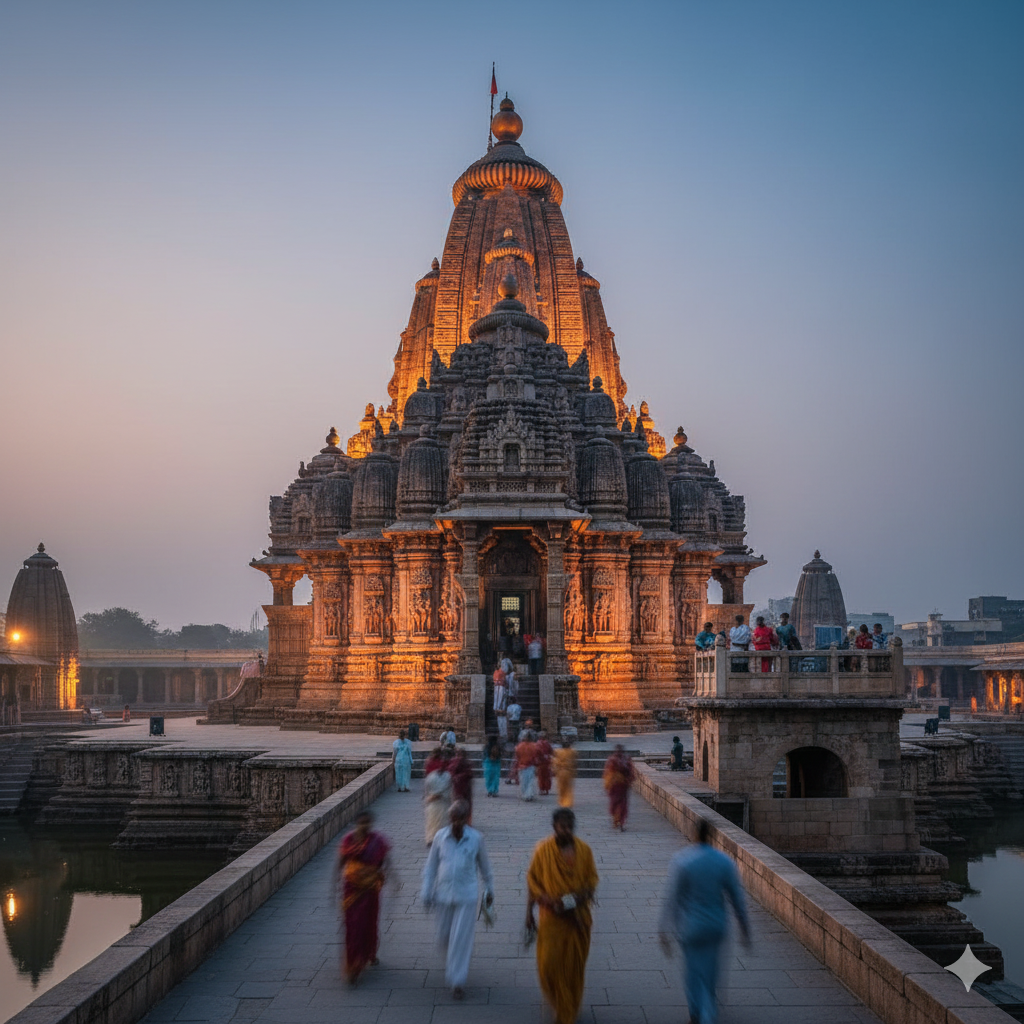
- Option 1 (Historic): Lingaraj Temple: A Masterpiece of Kalinga Architecture and the Spiritual Heart of Bhubaneswar
- Option 2 (Event Focused): Bhubaneswar’s Lingaraj Temple Gears Up for Maha Shivaratri and Rukuna Rath Yatra Celebrations
- Option 3 (Architectural): The Pinnacle of Temple Building: Exploring the 11th-Century Grandeur of the Lingaraj Temple
Key Content Points
1. Historical and Religious Significance
- The Deity: The temple is primarily dedicated to Lord Shiva, worshipped here as Tribhuneswara (Lord of Three Worlds), but the lingam is also uniquely worshipped as Harihara, representing the fusion of both Shiva and Vishnu. This dual worship is a key aspect of the temple’s syncretic tradition.
- Construction Date: The current massive structure is believed to have been completed around the 11th century CE by King Jajati Keshari of the Somavamsi Dynasty, though the site has been a place of worship since earlier times.
- The Scale: It is the largest and most active temple in Bhubaneswar, forming the spiritual and geographical center of the Old Town (Ekamra Khetra). The complex houses approximately 150 smaller shrines.
2. Architectural Marvel (Kalinga Style)
- The Spire (Vimana): The main tower (Vimana) stands at an imposing height of approximately 148 feet (45 meters) and is a perfect example of the fully developed Kalinga school of architecture. It showcases all the characteristic features: Vimana (sanctuary), Jagamohana (assembly hall), Natamandira (festival hall), and Bhoga Mandapa (hall of offerings).
- Intricate Details: The exterior walls are covered in exquisite carvings of deities, mythical creatures, and scenes from daily life, detailing the craftsmanship of the era.
3. Upcoming Major Festivals (News Focus)
The temple’s popularity is continually renewed through its grand observance of two main annual festivals:
- Maha Shivaratri (February/March 2026): This is the biggest annual festival here. Lakhs of devotees gather to offer prayers and fast until the Mahadeepa (a giant lamp) is raised to the top of the main spire late at night, signaling the end of the fast.
- Rukuna Rath Yatra (April 2026): Known as the ‘Rath Yatra of Lord Lingaraj,’ this is the temple’s own chariot festival, celebrated on the day of Ashokashtami. Unlike Puri’s Rath Yatra, the chariot here is famous for not taking a turn—it is pulled backward on its return journey.
4. Visitor Information
- Access: Due to its active religious status and conservative tradition, non-Hindus are currently not permitted inside the inner complex but can view the main spire and courtyard from a viewing platform near the northern gate.